Rooted & Growing

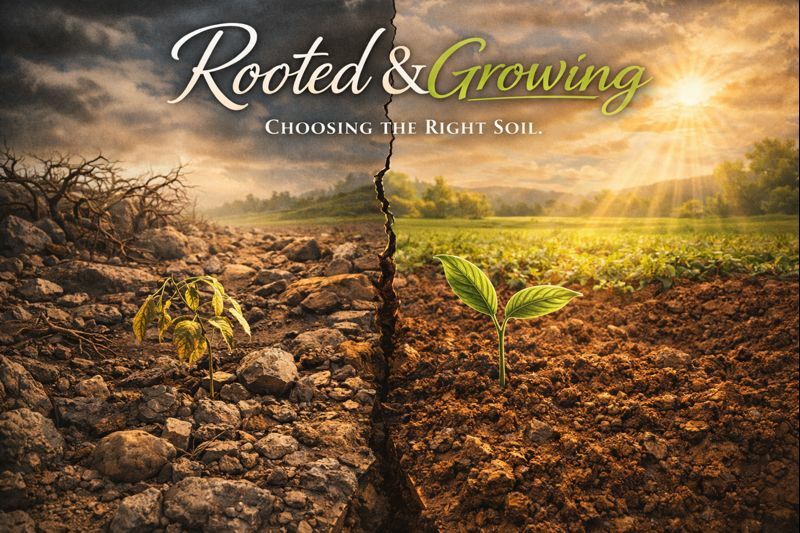
Growth does not happen in a vacuum. Seeds do not grow simply because they are planted. They grow because the soil receives them, nourishes them, and sustains them. Jesus makes this unmistakably clear when He teaches about the Kingdom using the image of soil. The same seed produces very different results depending on where it lands.
That truth forces us to wrestle with an uncomfortable but necessary question: What kind of soil am I right now?
Soil Is Formed Over Time
Soil does not become healthy overnight. It is shaped by seasons, conditions, and what is repeatedly introduced into it. In the same way, our spiritual soil is formed over years of habits, priorities, influences, and responses to God.
Every conversation we entertain, every voice we trust, every practice we repeat is shaping the condition of our hearts. None of us wake up one day spiritually hardened or spiritually flourishing by accident. Formation is always happening, whether we are intentional about it or not.
This is why Scripture consistently calls God’s people to examine themselves. Not with shame, but with honesty. Not to condemn, but to cultivate.
Compacted Soil and Busy Lives
One of the greatest threats to spiritual depth in our time is not outright rebellion. It is distraction. Life moves fast. Schedules stay full. Noise is constant. Even good things can compact the soil of our hearts until there is no room for the Word to take root.
When soil is compacted, water runs off instead of soaking in. Seeds sit on the surface instead of being planted deeply. Jesus describes this as a heart where truth is heard but never truly received.
This is why being rooted often requires slowing down. It requires margin. It requires space for God’s Word not just to be read, but to be reflected on, prayed through, and obeyed. Depth cannot grow in soil that is never allowed to rest.
Removing What Chokes Growth
Jesus also speaks of soil where thorns grow alongside the seed. The seed begins to grow, but it is eventually choked out by competing priorities. Worries. Wealth. The pursuit of comfort. The pressure to keep up.
This soil is especially dangerous because it looks alive for a season. There is growth. There is activity. But fruit never fully develops.
Rooted & Growing requires more than adding spiritual practices. It requires removing what competes for our deepest affection. There are things in our lives that are not sinful on their own, but they quietly consume the nutrients our faith needs to mature.
Healthy soil is not cluttered soil.
Cultivating Receptive Hearts
Good soil is not perfect soil. It is receptive soil. It is soil that is soft enough to receive the seed, deep enough to sustain roots, and clear enough to allow growth.
Spiritually, this kind of soil is cultivated through humility, repentance, and daily dependence on God. It is shaped by a willingness to listen, to learn, and to be corrected. It is formed when we come to God not just asking for blessing, but offering ourselves for transformation.
God is faithful to grow what is planted in good soil. The question is whether we are willing to tend the ground of our hearts with the same care we desire for the fruit of our lives.
A Moment of Reflection
Take time today to ask honestly:
-
What has been shaping the soil of my heart lately?
-
Where might my life be too crowded for deep roots?
-
What would it look like to intentionally cultivate space for God to work?
Growth is not just about what God does in us. It is also about what we allow Him access to.
A Simple Prayer
Lord, soften my heart. Remove what does not belong and prepare me to receive Your Word deeply. Shape my life so that what You plant in me can grow strong and bear fruit in its time. Amen.
-
Location
About
Contact
Office Hours